Strategy and bankroll planning
No staking system can turn a negative game into a guaranteed profit. Useful strategy starts with controlling costs, understanding the rules, and recording results consistently after wins and losses.
- Budget first
- Set an entertainment amount before opening the cashier.
- Count pending entries
- Unsettled contests are still money at risk.
- Use cash values
- Separate withdrawable cash from bonus or promotional balances.
- Expect variance
- A sound comparison can still lose in a short sample.
Four planning guides
Section titled “Four planning guides”- Bankroll management covers micro-entry and higher-entry sessions without presenting either as an investment plan.
- Multi-card and auto-daub helps find a manageable card count.
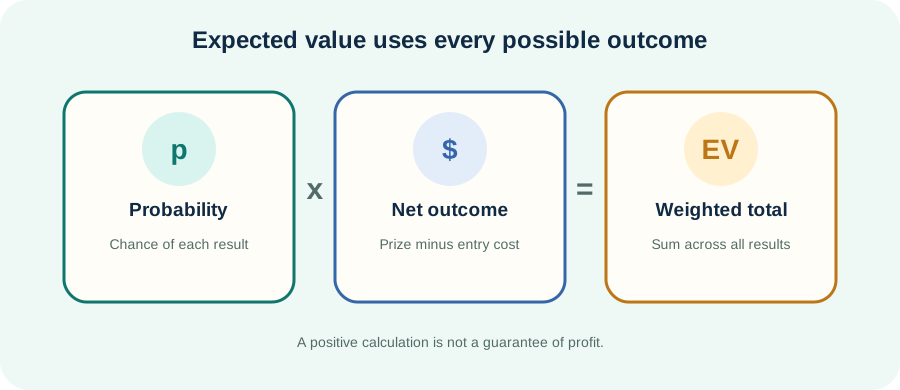
- Entry fees, prize pools, and EV explains entry-to-prize ratios and break-even skill estimates.
- Bonus rollover and playthrough identifies contribution, expiration, and withdrawal traps.
The pre-entry check
Section titled “The pre-entry check”Before every paid game, be able to state:
- cash entry cost;
- promotional amount used;
- prize distribution;
- number of entrants or fill rule;
- scoring or winning condition;
- settlement and refund rule;
- total pending exposure after entry.
If one item is hidden, skip the game or treat the missing information as uncertainty. Do not replace it with a number from an older review.
Track decisions, not lucky patterns
Section titled “Track decisions, not lucky patterns”Useful notes describe rule version, field, entry, score breakdown, errors, and outcome. Notes such as “this card is hot” or “a win is due” do not explain independent random draws. A larger sample can help evaluate a scoring decision, but past results do not force a future win.
Stop conditions
Section titled “Stop conditions”A stop condition can be an elapsed time, total entries, cash loss, difficulty staying focused, or urge to recover money. Set it while calm. When reached, leave the app and do not replace the limit with a deposit bonus.